

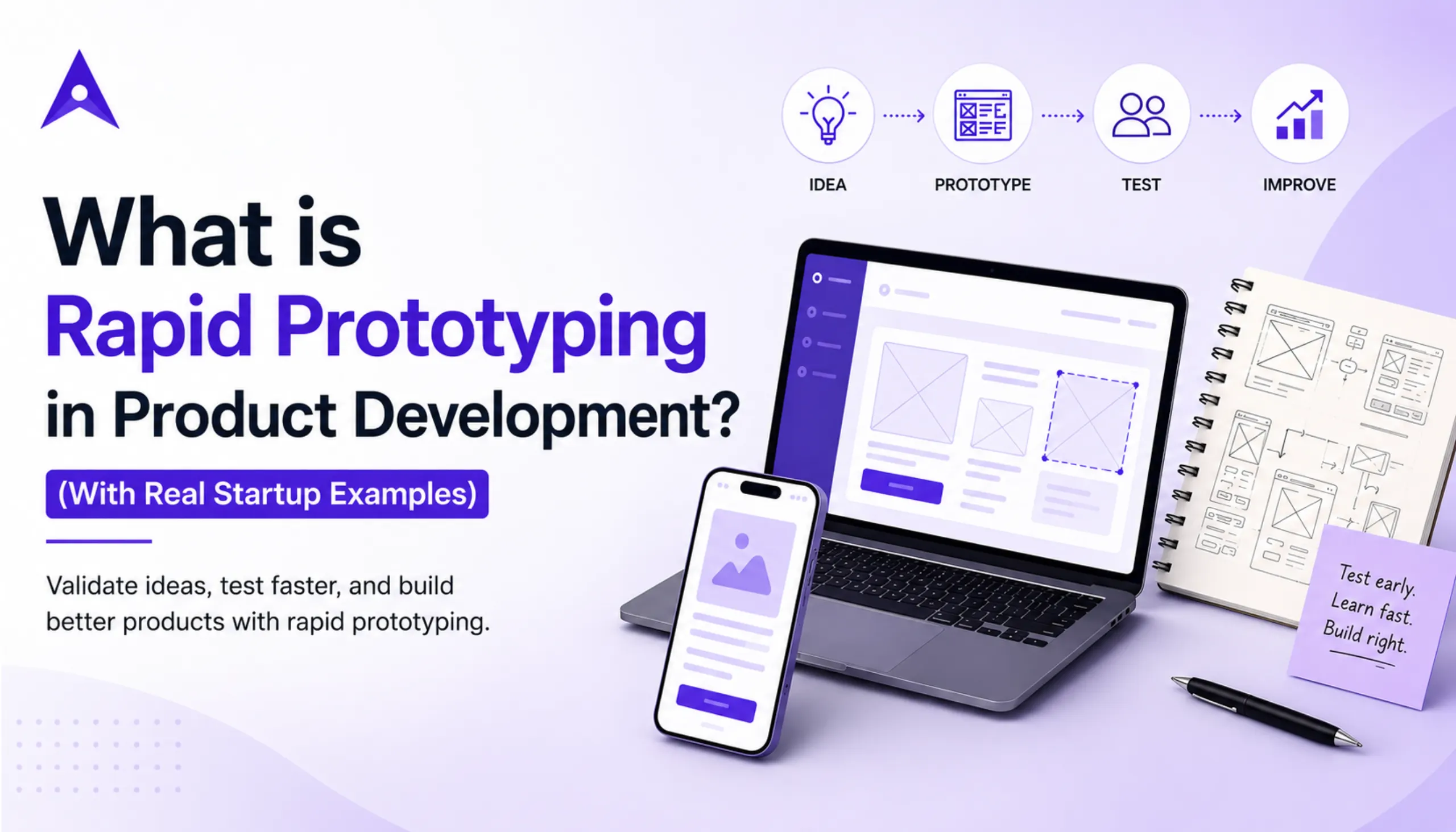

What if you could test a product idea before spending months building it? That is the power of rapid prototyping. It helps businesses quickly create and test product concepts before full development. Teams can validate ideas, improve usability, reduce risks, and refine products through continuous feedback.
In today’s fast-moving digital market, businesses cannot afford slow development cycles. Whether building software, mobile apps, SaaS platforms, healthcare products, or consumer electronics, companies need faster ways to innovate. Rapid prototyping enables early experimentation, better design decisions, and faster product launches.
Many successful startups, including Dropbox, Airbnb, Uber, and Instagram, used rapid prototyping to validate ideas before full-scale development. Early testing helped them gather user feedback, improve product-market fit, attract investors, and avoid costly mistakes.
Rapid Prototyping for Product Development plays a critical role in reducing uncertainty during the early stages of product building. It allows teams to test functionality, design assumptions, and user experience before committing to full-scale engineering.
Rapid prototyping also reduces development costs. Studies from the IBM Systems Sciences Institute show that fixing a problem during the design stage is significantly cheaper than in later stages. In fact, usability and design issues can be up to 10–100 times more expensive to fix after release compared to early detection. This is a key reason rapid prototyping is widely used to reduce risk and improve cost efficiency.
This guide explains what rapid prototyping is, how the process works, different methods, key benefits, challenges, tools, and best practices for building successful products faster. Before exploring the full process and real-world applications, here are the key takeaways.
Key Takeaways
- Rapid prototyping helps startups and businesses validate product ideas before full-scale development.
- Companies like Dropbox, Airbnb, Uber, and Instagram used prototypes to test concepts and improve product-market fit.
- The rapid prototyping process reduces development costs, minimizes risks, and accelerates time-to-market.
- Digital prototyping and rapid software prototyping are widely used in SaaS, mobile app, and UI/UX development.
- Continuous testing and user feedback improve usability, product innovation, and customer satisfaction.
- Startups often use prototypes to attract investors, validate MVP ideas, and scale products more efficiently.
Table of Contents
Why Does Rapid Prototyping Matter in Modern Product Development?
Customer expectations continue evolving rapidly, making traditional development methods increasingly risky. Businesses that spend months or years building products without validation often face:
- poor product-market fit
- usability problems
- delayed launches
- expensive redesigns
- failed product adoption
Rapid prototyping addresses these challenges by enabling businesses to test ideas before investing heavily in engineering or manufacturing.
Many businesses also partner with a product development company to streamline validation, improve design decisions, and accelerate product delivery.
Dropbox is one of the most well-known examples of rapid prototyping success. Before building the actual product, the company released a simple prototype video demonstrating the concept. This early validation helped confirm market demand before large-scale development began.
Similarly, companies like Apple, Tesla, Airbnb, and IDEO continuously use iterative design and prototype testing to improve products before launch.
Rapid prototyping supports:
- agile product development
- design validation
- user-centered design
- product iteration
- faster innovation cycles
- lower development risks
How Does Rapid Prototyping Work?
Understanding how rapid prototyping works is critical for product teams aiming to improve innovation efficiency. The process follows a continuous cycle of designing, testing, gathering feedback, and refining ideas until the product concept is validated. Instead of relying on assumptions, businesses use rapid prototyping to learn from real interactions early in the product development journey.
Idea and Problem Identification
The process begins during the product discovery phase, where teams identify customer pain points, market opportunities, business goals, and technical feasibility.. Teams conduct user research, brainstorming sessions, competitor analysis, and stakeholder discussions to clearly define the problem the product aims to solve. This stage creates a strong foundation for building meaningful and user-focused solutions.
This is precisely what structured product discovery services are designed to deliver, helping teams move from vague ideas to clearly defined, validated problem statements before any design work begins.
Wireframing and Concept Visualization
Once the problem is defined, teams create sketches, user journeys, product wireframes, and low-fidelity concepts to visualize the product idea. These early representations help align stakeholders, clarify workflows, and simplify decision-making before development begins. At this stage, the focus remains on structure, usability, and overall product flow rather than detailed design.
User Testing and Feedback Collection
After the prototype is built, it is tested with users, stakeholders, investors, and product teams to gather practical feedback. Teams evaluate usability, navigation, functionality, design clarity, and technical limitations to understand how effectively the prototype solves user problems. This feedback loop plays a major role in improving product quality and reducing future development risks.
Prototype Creation
Designers and engineers then transform concepts into interactive or functional prototypes using tools like Figma, Adobe XD, CAD software, simulation platforms, or 3D printing technologies. This stage converts abstract ideas into testable experiences that users and stakeholders can interact with directly. Depending on the product type, prototypes may range from simple clickable screens to fully functional models. Effective prototype design helps teams visualize product functionality, improve usability, and gather meaningful feedback early in development.
Iteration and Refinement
Based on testing insights, teams continuously refine the prototype to improve usability, functionality, and overall user experience. Multiple iterations help businesses validate assumptions, eliminate weak ideas, and optimize product performance before full-scale development begins. This iterative approach is what makes rapid prototyping highly effective in modern product development environments.
Now that we understand the conceptual workflow, let’s break down the structured rapid prototyping process followed by real product teams.
Rapid Prototyping Process in Product Development
Businesses that successfully implement rapid prototyping often follow a structured workflow. This approach is closely aligned with structured innovation frameworks like the Google Ventures Design Sprint, which helps teams rapidly prototype, test, and validate ideas before full-scale development.
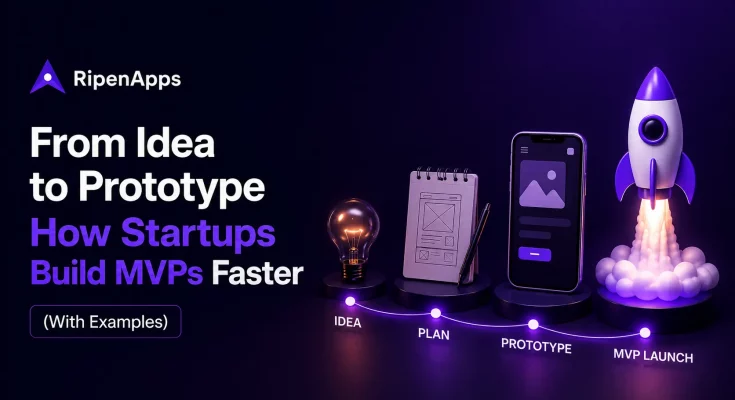
Step 1: Define the User Problem
Start by identifying the specific user pain point the product aims to solve. This step ensures the team builds around real needs rather than assumptions. It also helps clearly define the scope and direction of the product.
Step 2: Create Initial Concepts
Develop sketches, workflows, and interface layouts to visualize the product idea. These early concepts help align stakeholders and simplify complex ideas into clear visual structures. They also support faster feedback in the early stage.
Step 3: Build the Prototype
Create a functional or interactive version of the product using prototyping tools. This stage transforms ideas into tangible experiences that can be tested and evaluated. It helps identify usability and technical gaps early.
Step 4: Conduct Prototype Testing
Test the prototype with real users to gather insights and usability feedback. This ensures the product is validated against real-world expectations. It also highlights areas that need improvement before development.
Step 5: Improve Through Iteration
Refine the product repeatedly based on user behavior and testing outcomes. Each iteration improves usability, performance, and overall user experience. This cycle continues until the product meets expectations.
Step 6: Validate Product-Market Fit
Once the prototype solves user problems effectively, teams can proceed toward development or production. This step confirms that the solution has real demand and business viability. It reduces the risk of building a product that fails in the market.
Read more: How to Build a Minimum Viable Product
After understanding the process, it is important to know the best prototyping tools for product development.
Best Rapid Prototyping Tools for Product Development
Choosing the right tools is essential for effective prototyping. The right platform helps teams speed up design, improve collaboration, and validate ideas more efficiently. It also ensures smoother transitions from concept to development.
- Interactive UI/UX prototyping: Figma, Framer, ProtoPie, Webflow. Covers hi-fi clickable prototypes and interaction design.
- Frontend prototype development: React.js, Next.js, Flutter, React Native. Near-production code-based prototypes for SaaS and mobile.
- Cloud-based prototype infrastructure: Firebase, Supabase, Vercel, AWS Amplify. Validates backend flows without full engineering investment.
- AI-assisted prototyping: Uizard, Galileo AI, Figma AI. Speeds up layout generation and usability analysis.
- AR/VR simulations: Keep brief and tied to user-experience testing, not hardware.
Teams that invest in professional UI/UX design services at this stage ensure their prototypes reflect real user needs and brand standards before a single line of code is written. Beyond tools, modern rapid prototyping is powered by advanced technologies that enable faster and more precise validation.
Technologies Powering Modern Rapid Prototyping
Rapid prototyping combines multiple technologies depending on industry requirements. These technologies work together to speed up validation, improve accuracy, and reduce development risks across digital and physical product environments.
CAD Software
Computer-aided design tools help engineers create accurate models and simulations. They allow teams to visualize, modify, and refine product designs before physical production begins.
CNC Machining
Useful for creating durable and precise prototype parts. It is especially effective for producing high-accuracy components used in engineering and industrial applications.
AR and VR Simulations
Immersive technologies allow businesses to test virtual product experiences before manufacturing. These simulations help teams evaluate usability and user interaction in a controlled digital environment.
AI-Assisted Prototyping
Artificial intelligence is transforming prototyping through automated design suggestions, predictive usability analysis, layout optimization, and rapid design generation. It helps teams speed up decision-making and improve design efficiency with data-driven insights.
To understand the real advantage of these technologies, it helps to compare rapid prototyping with traditional product development.
Rapid Prototyping vs Traditional Product Development
This comparison highlights two fundamentally different approaches to building products. While rapid prototyping focuses on speed, iteration, and continuous validation, traditional development follows a more linear and structured process that emphasizes planning and final execution.
| Rapid Prototyping | Traditional Development |
| Fast iterative cycles | Long sequential processes |
| Early usability testing | Late-stage testing |
| Lower redesign cost | Expensive modifications |
| Agile and flexible | Rigid development structures |
| Faster innovation | Slower adaptation |
| Continuous customer feedback | Limited feedback loops |
Traditional development often delays testing until products are nearly complete, increasing risks and development costs.
The real impact of rapid prototyping becomes clear when we look at how successful startups have used it to build global products.
Real Startup Examples of Rapid Prototyping

Some of the world’s most successful startups used rapid prototyping to validate ideas and improve products before scaling.
Dropbox: Validating Demand Before Development
Dropbox famously created a simple prototype demo video before building the complete product infrastructure. This helped validate market demand and attract early adopters without investing heavily in development initially.
This approach demonstrated how rapid software prototyping can reduce startup risk significantly.
Instagram: Pivoting Through User Feedback
Instagram originally started as a more complex app called Burbn. Through early prototype testing and user behavior analysis, the founders discovered that users were primarily interested in photo-sharing features rather than the app’s broader functionality.
This rapid iteration helped simplify the product experience and transform Instagram into one of the world’s most successful social media platforms.
Uber: Validating Core Functionality First
Uber’s initial prototype focused only on solving one core problem: easy ride booking. The team validated this concept before investing in full-scale mobile app development, which allowed them to scale faster while minimizing product complexity.
This lean prototyping approach helped Uber scale faster while minimizing early-stage product complexity and development risks.
Airbnb: Testing Product-Market Fit Quickly
Airbnb began with a basic website prototype that allowed founders to test whether users would actually pay to stay in other people’s homes.
The early prototype helped validate customer demand before the platform expanded globally.
Slack: From Internal Tool to Global SaaS Platform
Slack initially began as an internal communication prototype built for a gaming company. Continuous testing and user feedback revealed strong product potential, leading the team to transform it into a standalone SaaS platform.
This demonstrates how iterative design and rapid prototyping can uncover unexpected business opportunities.
While these examples show success stories, it’s equally important to understand where teams often go wrong in rapid prototyping. Today, many founders work with a specialized startup app development company to rapidly prototype ideas, validate user demand, and launch scalable MVPs faster.
Real Rapid Prototyping Success Stories by RipenApps
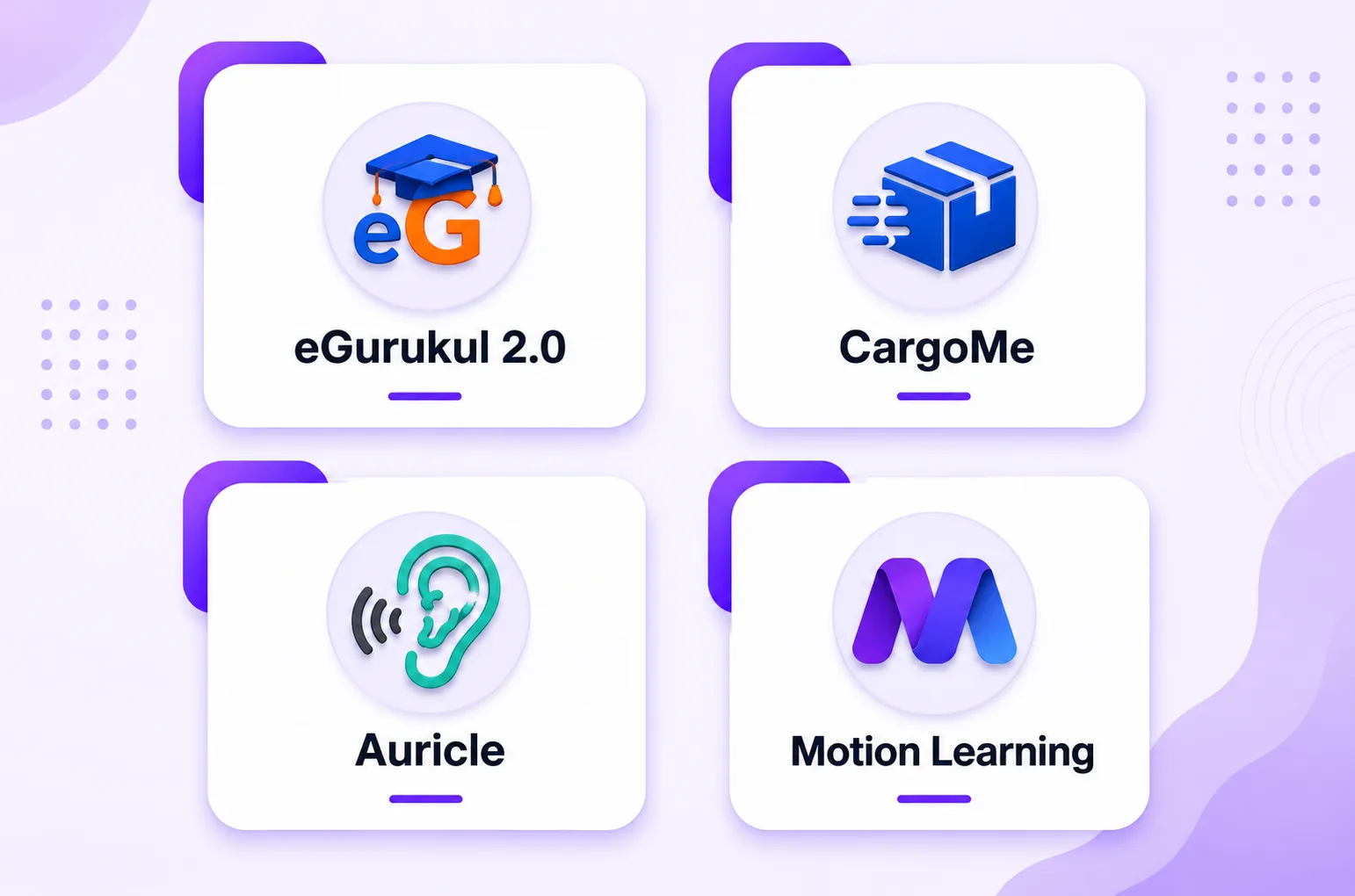
RipenApps has helped multiple businesses transform product ideas into scalable digital solutions through rapid prototyping and iterative product validation. These real-world case studies demonstrate how early testing, user feedback, and continuous refinement can improve usability, engagement, and overall product success before full-scale development.
eGurukul 2.0: Improving Learning Experience Through Prototyping
eGurukul 2.0 was refined using rapid prototyping to validate user journeys and improve the overall learning experience before full-scale development. Early-stage prototypes helped streamline navigation, optimize content flow, and ensure an intuitive interface for students and educators.
This approach demonstrated how rapid prototyping in product development can significantly improve usability and reduce post-launch design iterations.
CargoMe: Optimizing Logistics Workflows Through Prototyping
CargoMe utilized rapid prototyping to validate logistics workflows and improve operational efficiency before full-scale product development. Early prototypes helped refine shipment tracking, simplify user navigation, and optimize delivery management experiences for end users and businesses.
This approach demonstrated how rapid prototyping can streamline complex workflows, improve usability, and reduce development risks in logistics and transportation platforms.
Auricle: Enhancing Digital Healthcare Experiences
Auricle leveraged rapid prototyping to validate healthcare workflows and improve patient interaction experiences before full-scale development. Early-stage prototypes helped optimize navigation, simplify core user journeys, and create a more intuitive digital healthcare interface for users.
This approach demonstrated how rapid prototyping can improve usability, reduce friction, and accelerate healthcare product development with user-centered design validation.
Motion Learning: Validating User Engagement Early
Motion Learning leveraged rapid prototyping to test core learning flows and engagement patterns before building the final application. This allowed the team to refine interactive elements, simplify exam preparation journeys, and enhance overall user retention.
This approach demonstrated how rapid prototyping helps validate product-market fit early while minimizing development risks and improving user satisfaction.
Common Mistakes in Rapid Prototype Development
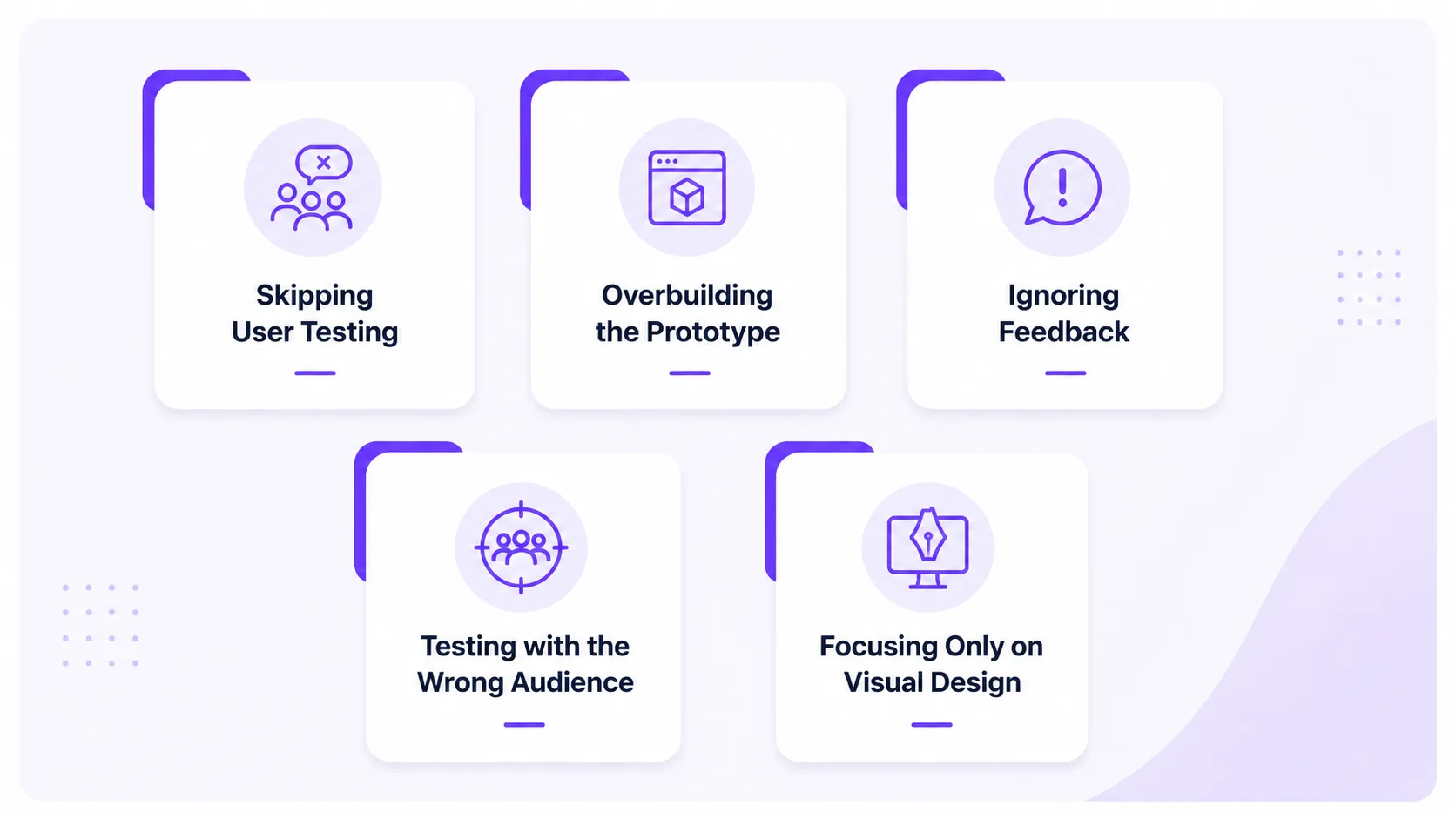
Even though rapid prototyping is highly effective, businesses can still make costly mistakes. These mistakes often slow down validation and lead to incorrect product decisions.
Skipping User Testing
A prototype without real user feedback provides limited validation value. Without testing, teams risk building assumptions instead of solving real user problems. This can lead to poor product-market fit later in development.
Overbuilding the Prototype
Teams should avoid making prototypes unnecessarily complex before validation. Adding too many features too early defeats the purpose of quick experimentation. It also increases time and effort without clear learning outcomes.
Ignoring Feedback
Failing to act on usability insights reduces the effectiveness of iterative design. Feedback is only valuable when it directly influences product improvements. Ignoring it often leads to repeated design mistakes.
Testing with the Wrong Audience
Feedback should come from the target user group, not only internal teams. Internal opinions often lack real-world user behavior context. This can result in misleading validation results.
Focusing Only on Visual Design
A visually appealing prototype may still fail if workflows and usability are poor. Functionality and user experience should always take priority over aesthetics. Otherwise, the product may look good but fail in real usage.
Future of Rapid Prototyping
These best practices are already evolving as new technologies reshape how prototyping is done. Many companies offering MVP development services use rapid prototyping to test assumptions, improve usability, and achieve stronger product-market fit before engineering begins. The future of rapid prototyping is becoming increasingly intelligent, collaborative, and automated. Emerging trends include:
- AI-generated interfaces
- generative product design
- immersive AR/VR simulations
- cloud-based collaboration
- predictive usability analysis
- automated concept modeling
As technologies continue evolving, rapid prototyping will remain essential for businesses aiming to innovate faster and improve customer experiences.
Organizations embracing agile experimentation and continuous validation will gain significant competitive advantages in digital markets. In more complex product environments, teams often supplement these practices with external expertise.
When Should Businesses Use Rapid Prototyping Services?
Businesses should consider rapid prototyping services when launching new products, validating startup ideas, testing user experiences, reducing development risks, or accelerating innovation cycles. It is especially valuable for startups, SaaS businesses, healthcare innovators, enterprise software companies, manufacturing firms, and eCommerce brands that need faster validation before full-scale development.
Engaging product strategy consulting early in this process ensures that prototyping efforts are aligned with business goals, target market realities, and long-term scalability plans
By identifying usability issues and technical challenges early, businesses can avoid costly redesigns and make faster product decisions. Rapid prototyping also enables teams to gather real user feedback quickly, helping them build more user-focused and scalable products.
Conclusion
Rapid prototyping has transformed how businesses innovate, validate ideas, and build products. It is now widely used across software, SaaS development, and industrial development to reduce risks, improve usability, and speed up delivery.
Understanding what rapid prototyping is is essential for modern product teams that want to move faster and build user-focused solutions. By integrating prototyping into the product development process, businesses can improve decision-making and achieve better product-market fit.
In today’s competitive market, success depends on continuous iteration and early validation. Rapid prototyping is no longer just a development method; it is a decision-making framework for modern product teams. For businesses aiming to adopt this approach effectively, partnering with an experienced team like RipenApps can help accelerate prototyping, strengthen MVP development, and turn ideas into scalable digital products efficiently.

FAQ
1. What is rapid prototyping?
Rapid prototyping is an iterative product development approach used to create early versions of a product quickly for testing, validation, and refinement. It allows businesses to evaluate concepts, improve usability, reduce development risks, and accelerate innovation before investing in full-scale production.
2. How does rapid prototyping help startups?
Rapid prototyping helps startups validate ideas faster, reduce development costs, improve product-market fit, and gather early user feedback before investing heavily in engineering or manufacturing.
3. What is the difference between a prototype and an MVP?
A prototype is primarily used to test concepts, workflows, and usability, while an MVP is a functional product released to real users with core features to validate market demand.
4. Which companies used rapid prototyping successfully?
Companies like Dropbox, Airbnb, Uber, Instagram, and Slack used rapid prototyping to test ideas, improve user experiences, and validate product-market fit before scaling globally.
5. Why is rapid prototyping important in product development?
Rapid prototyping is important because it enables businesses to test ideas quickly, reduce product risks, improve usability, accelerate innovation, and launch products faster through continuous feedback and iterative improvements.

SHARE
WRITTEN BY

Prankur Haldiya
Chief Technical Officer
A tech innovator and engineering leader, Prankur Haldiya drives RipenApps’ product development strategy and oversees cutting-edge solutions in mobility, AI, and cloud ecosystems. He is passionate about building high-performance teams and helping brands launch secure, scalable, and user-centric digital products.
View All Articles





 India
India USA
USA Australia
 Canada
 UK
UK UAE
UAE