

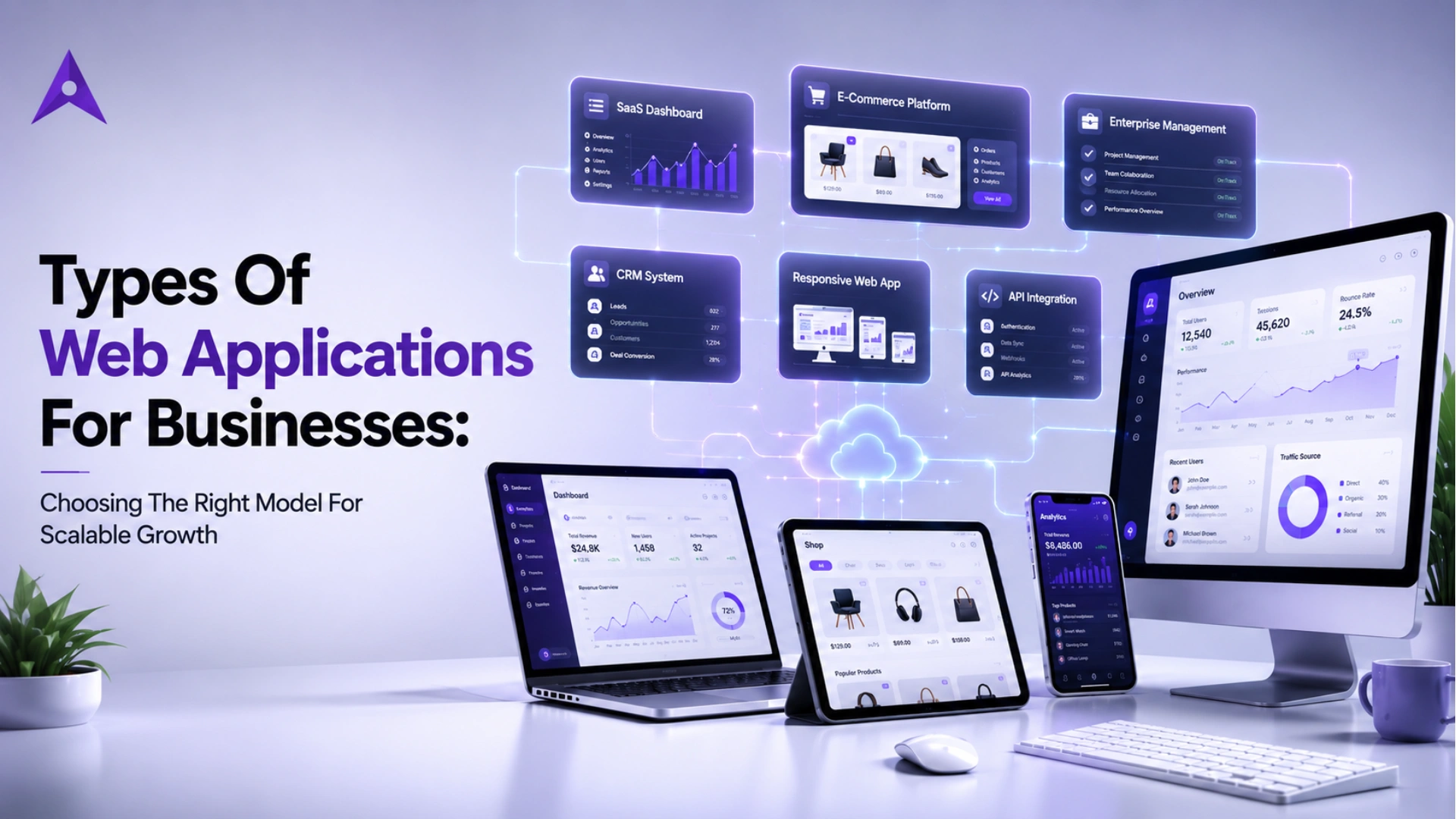

The difference between a web app that scales to millions of users and one that collapses under growth often comes down to a single decision: choosing the right architecture from day one. It supports growth, improves user experience, and makes future expansion easier. The wrong one can lead to performance issues, frustrated users, and rising development costs.
Today, businesses depend heavily on digital platforms to serve customers and streamline operations. Startups want to launch MVPs quickly and iterate faster. E-commerce companies need applications that can handle high traffic and transactions without performance drops. Enterprises are modernizing outdated systems to improve efficiency, scalability, and customer engagement.
As digital transformation accelerates, businesses are increasingly investing in professional web development services to build scalable, secure, and high-performing web applications. Choosing the right development approach helps companies improve customer experiences, streamline operations, and adapt more effectively to evolving market demands.
Because of this, choosing the right web application model is no longer just a technical decision. It’s a strategic business decision that affects scalability, operational efficiency, customer satisfaction, and long-term growth. In this guide, we’ll explore the major types of web applications, their business use cases, and the technologies driving modern digital experiences.
Key Takeaways
- Businesses should choose web application architectures based on scalability needs, performance goals, SEO requirements, and long-term flexibility.
- Common web application types include SPAs, MPAs, PWAs, ecommerce platforms, and cloud-native enterprise applications.
- SPAs deliver faster, app-like experiences, while MPAs offer better SEO and structured content management.
- PWAs combine mobile-app functionality with browser accessibility, helping businesses reduce development costs and improve user engagement.
- API-first architecture, DevOps practices, and cloud-native technologies like Docker and Kubernetes are shaping modern scalable web development.
- Choosing the wrong web application model can lead to poor performance, higher operational costs, and limited scalability over time.
Table of Contents
Understanding Web Applications in Modern Business
Web applications are browser-based software solutions that allow users to interact with digital platforms over the internet. Unlike traditional websites, they support dynamic features, real-time interactions, and personalized user experiences.
Businesses use web applications to improve customer engagement, streamline operations, and deliver services more efficiently. They help users perform actions like shopping, messaging, streaming, collaboration, and workflow management directly through a web browser.
Modern businesses rely on web applications because they are scalable, accessible across devices, and easier to maintain than traditional desktop software. They also support faster updates and better user experiences.
The applications of web technology extend well beyond these platforms, spanning healthcare portals, government systems, financial dashboards, and logistics tools that power everyday business operations. Popular examples include Hungama, Netflix, Slack, Amazon, Cobone, and Shopify. These platforms show how web applications power communication, e-commerce, entertainment, and business productivity.
How do Web Applications Work?
Web applications function through multiple technologies working together to deliver seamless online experiences. These interconnected components handle user interactions, data processing, and real-time communication efficiently.
Modern web applications rely on several interconnected components:
Frontend
The frontend is the visual layer users interact with. It includes layouts, navigation, forms, dashboards, and interactive UI elements.
Popular frontend technologies include:
- React
- Angular
- Vue.js
Backend
The backend handles business logic, authentication, APIs, and database interactions.
Common backend technologies include:
- Node.js
- Python
- Java
- .NET
Businesses often rely on full stack development services to manage both frontend and backend layers within a single, cohesive team.
APIs
Application Programming Interfaces (APIs) enable communication between frontend systems, backend services, databases, and third-party tools.
Databases
Databases store user information, content, analytics, transactions, and application data.
Popular database technologies include:
- PostgreSQL
- MongoDB
- Redis
Cloud Infrastructure
Most modern businesses deploy applications on cloud platforms like AWS, Azure, or Google Cloud to improve scalability, reliability, and performance.
Why do Businesses Need Different Types of Web Applications?
Not every business requires the same web application architecture. A content-driven publishing platform has very different requirements compared to a real-time trading dashboard or an enterprise SaaS platform.
Factors influencing web application selection include:
| Business Goal | Recommended Web App Type |
| SEO-focused websites | MPA |
| Interactive SaaS platforms | SPA |
| Mobile-first experiences | PWA |
| Enterprise scalability | Cloud-native apps |
| Real-time collaboration | Dynamic applications |
Businesses must evaluate:
- Scalability requirements
- Performance expectations
- SEO goals
- Security and compliance needs
- Real-time functionality
- Long-term maintenance costs
Choosing the right architecture early can significantly reduce development costs and infrastructure complexity as the business grows.
Types Of Web Applications for Businesses for Scalable Growth
These web application categories range from lightweight static sites to complex cloud-native enterprise systems, each serving a distinct business purpose and growth stage. Web application businesses include eCommerce platforms, SaaS products, online marketplaces, and subscription-based services that leverage the internet to reach global audiences efficiently. These models offer scalable growth by automating operations, reducing overhead costs, and enabling businesses to expand rapidly with increasing user demand.
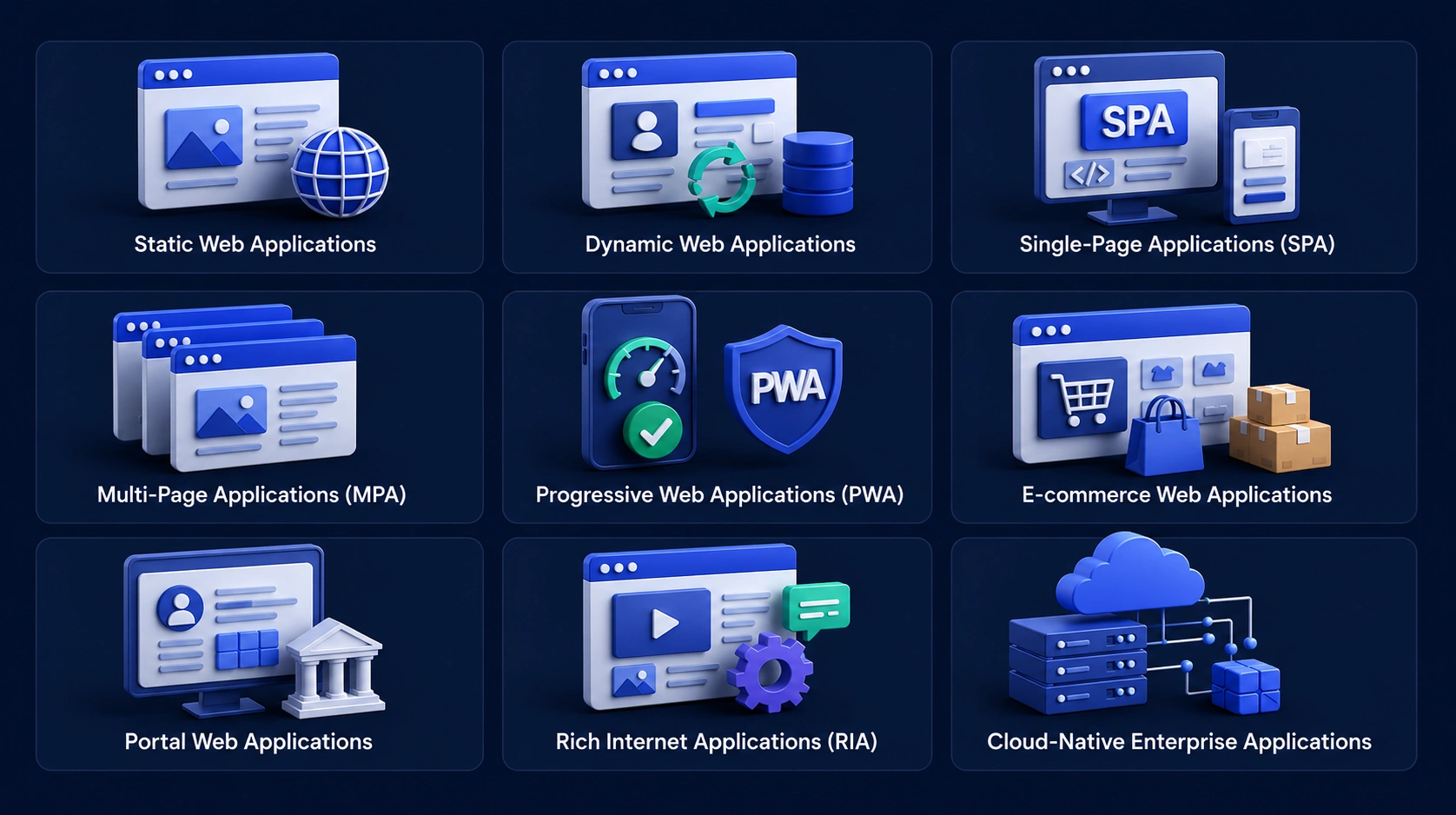
Static Web Applications
Static web applications are among the simplest forms of web architecture. These applications primarily display fixed content built with HTML, CSS, and JavaScript.
Best For:
A practical choice for businesses that need a simple and reliable online presence. Suitable for projects with straightforward functionality and design requirements.
- Portfolio websites
- Landing pages
- Small business websites
- Marketing campaigns
Advantages:
Static websites are easy to build, manage, and maintain. They provide a smooth user experience with reliable performance.
- Fast loading speed
- Lower hosting costs
- Minimal backend complexity
- Easier deployment
Static applications work well for businesses with minimal content changes and simple functionality.
Dynamic Web Applications
Dynamic web applications generate content in real time based on user interactions, database queries, and business logic.
Popular Dynamic Web application examples include:
- Social media platforms
- CRM systems
- Booking portals
- Online dashboards
Advantages:
Dynamic websites create more engaging and interactive user experiences. They also allow businesses to manage and update content more efficiently as they grow.
- Personalized experiences
- Real-time updates
- Interactive user engagement
- Flexible content management
Single-Page Applications (SPA)
Single-page applications load a single HTML page and dynamically update content without reloading the browser.
Popular SPA frameworks include:
- React
- Angular
- Vue.js
Best For:
Single-page applications are ideal for modern web platforms that require speed and seamless interactions. They work well for businesses focused on delivering highly interactive digital experiences.
- SaaS products
- Project management tools
- Analytics dashboards
- Collaboration platforms
Benefits:
These applications provide a fast and smooth user experience with responsive navigation. Their app-like functionality also improves user engagement and overall performance.
- Faster interactions
- Smooth user experience
- Reduced server requests
- App-like functionality
However, SPAs may face SEO limitations because much of the rendering happens on the client side.
Many businesses partner with a Node js development company to power the backend of their SPAs, taking advantage of Node’s non-blocking architecture for real-time data handling and high-concurrency performance.
Multi-Page Applications (MPA)
Multi-page applications reload entire pages when users navigate between sections.
Best For:
Multi-page applications are suitable for large-scale websites with extensive content and multiple user sections. They are commonly used by businesses that require strong organization and search engine visibility.
- E-commerce platforms
- Large enterprise websites
- Content-heavy portals
- SEO-focused businesses
Benefits:
These applications offer a structured browsing experience with better content management. They also support improved SEO performance and scalable functionality for growing businesses.
- Better SEO crawlability
- Clear content structure
- Easier analytics segmentation
- Strong server-side rendering support
Many large businesses continue using MPAs due to their scalability and search engine optimization advantages.
Most MPAs are built using CMS platforms. WordPress powers 43% of the web, while headless CMS tools like Strapi and Contentful give teams API-first flexibility while keeping editors in control of content.
Progressive Web Applications (PWA)
PWAs help businesses improve mobile engagement and deliver app-like experiences without building separate native applications. Businesses planning scalable digital products should also understand the complete web application development process to choose the right architecture, frameworks, and deployment strategy for long-term growth.
Key Features:
- Offline support
- Push notifications
- App-like experiences
- Fast mobile performance
These applications often support role-based access, document sharing, workflow automation, and real-time data visibility. Because multiple user groups interact with the same system, portal applications require strong authentication systems, secure APIs, and reliable backend infrastructure.
A good example is Cobone, which operates with portal-like functionality for users, merchants, and administrators managing deals, transactions, and customer interactions across a centralized platform.
The biggest challenge with portal web applications is not the initial development phase. It is planning the permission structure, user access hierarchy, and long-term scalability before development begins. Businesses that invest in well-structured portal architecture early often avoid major operational and security issues later.
Read More: How to Build Progressive Web Apps
E-commerce Web Applications
E-commerce web applications help businesses sell products and manage online shopping experiences efficiently. They support seamless transactions, customer management, and scalable digital operations.
E-commerce applications manage:
- Product catalogs
- Payments
- Checkout systems
- Customer profiles
- Order management
Challenges:
These applications require strong performance, security, and real-time data handling to operate smoothly. Managing high traffic and maintaining system reliability during peak demand can also be challenging.
- Traffic spikes
- Inventory synchronization
- Payment security
- Scalability during peak sales
Modern e-commerce platforms increasingly rely on cloud-native infrastructure and headless commerce architectures.
Portal Web Applications
Portal web applications offer users personalized access to information and services through secure login systems. They are commonly used to streamline communication, collaboration, and data management across organizations.
Some popular examples:
- Employee dashboards
- Banking portals
- Healthcare systems
- Educational platforms
These systems require strong authentication, high availability, and secure APIs.
Rich Internet Applications (RIA)
Rich Internet Applications provide dynamic and engaging user experiences with advanced browser-based functionality. They combine the responsiveness of desktop software with the accessibility of web applications.
Examples:
- Design tools
- Collaboration software
- Interactive analytics platforms
Features:
RIAs focus on smooth interactions, real-time functionality, and visually rich interfaces. They are designed to enhance usability and improve overall user engagement.
- Advanced UI interactions
- Real-time updates
- Complex workflows
- Multimedia support
RIAs focus heavily on performance, responsiveness, and immersive user experiences. These applications often support dynamic content updates, multimedia processing, drag-and-drop functionality, and complex workflows without requiring full page reloads.
A strong example is Hungama, which delivers interactive streaming experiences, personalized content recommendations, and real-time media access across devices through rich web technologies.
Rich Internet Applications typically require $30K–$150K+, depending on frontend complexity, multimedia requirements, real-time features, and scalability expectations. Applications involving live collaboration, streaming, or analytics generally demand stronger frontend architecture and optimized rendering strategies.
The biggest challenge with RIAs is balancing advanced frontend functionality with performance optimization. Businesses often focus heavily on visual interactions early in development but underestimate browser rendering load, device compatibility, and scalability under growing user traffic.
Cloud-Native Enterprise Applications
Cloud-native enterprise applications are designed to operate efficiently in modern cloud environments with high scalability and flexibility. They help businesses manage complex operations while supporting rapid growth and continuous deployment.
Unlike traditional monolithic systems, cloud-native applications are built using modular services that can scale independently. This architecture improves flexibility, operational efficiency, fault tolerance, and deployment speed for growing businesses.
Core Technologies:
These applications rely on modern infrastructure technologies to improve scalability, automation, and system reliability. Their architecture supports efficient resource management and seamless application deployment.
- Kubernetes
- Docker
- Microservices
- Distributed systems
Benefits:
Cloud-native solutions offer greater scalability, resilience, and operational efficiency for enterprises. They also enable faster development cycles and improved performance across distributed systems.
- Horizontal scalability
- High availability
- Faster deployment cycles
- Resilient infrastructure
Partnering with the right cloud implementation services provider ensures businesses migrate, deploy, and scale cloud-native applications without disrupting existing operations.”
Large-scale platforms like Google Pay and BMW rely heavily on cloud-native infrastructure to manage high transaction volumes, real-time services, connected systems, and global scalability requirements.
Cloud-native enterprise applications typically require $100K–$500K+, depending on infrastructure complexity, migration requirements, DevOps implementation, distributed architecture, and security compliance needs. Enterprise-grade applications also require long-term monitoring, automation, and cloud optimization strategies.
Popular Business Web Application Examples
Business web application software includes a wide range of platforms designed to support operations, communication, and customer engagement online. These applications help organizations improve productivity, accessibility, and overall digital experiences.
| Platform | Web App Type | Key Feature |
| Gmail | Dynamic Web App | Real-time updates |
| Netflix | SPA | Streaming UX |
| Amazon | MPA | E-commerce scalability |
| Hungama | Dynamic Web App / PWA | 50M+ users, streaming + offline |
| Slack | SaaS Application | Team collaboration |
| Cobone | MPA / E-commerce | 4M+ MENA users, deal marketplace |
These examples demonstrate how businesses choose different architectures based on user expectations and operational needs.
SPA vs MPA vs PWA: Which Web App Model Is Best?
The best web application model depends on your business goals, user experience requirements, and scalability needs. Each approach offers unique advantages for performance, functionality, and long-term growth.
| Feature | SPA | MPA | PWA |
| SEO | Medium | High | Medium |
| UX | Excellent | Good | Excellent |
| Speed | High | Medium | High |
| Offline Support | No | No | Yes |
| Scalability | High | High | High |
PWAs combine app-like experiences with browser accessibility and offline support. Businesses evaluating this approach should also understand the differences between a Progressive Web App and a website before making development decisions.
How To Choose The Right Web Application Type Based On Business Growth Stage
Choosing the right web application type depends on your business size, target audience, and future scalability plans. The right solution can improve performance, user experience, and long-term operational efficiency.
Many enterprises also rely on legacy software modernization services to migrate outdated systems into scalable, cloud-ready web applications without disrupting ongoing operations.
Startup MVP Applications
Startup MVP applications focus on fast deployment and lower development costs. They also require rapid iteration and flexibility during early-stage growth. Businesses comparing deployment strategies often evaluate native vs hybrid vs web apps before selecting the right product approach.
Scaling SaaS Platforms
As SaaS platforms grow, they need flexible and scalable architectures to support increasing users and complex operations. Modern infrastructure and real-time capabilities help ensure consistent performance, reliability, and seamless user experiences.
Enterprise Web Applications
Enterprise web applications are designed to support large-scale business operations with strong reliability and security. They help organizations manage complex workflows, large user bases, and critical business data efficiently.
E-commerce Growth Platforms
E-commerce growth platforms are built to handle increasing customer demand and expanding online operations. They focus on delivering scalable performance, secure transactions, and seamless shopping experiences.
Businesses should avoid choosing web application architectures based solely on trends. Scalability requirements, SEO priorities, deployment complexity, and long-term operational costs should guide architectural decisions instead.
Scalability vs Performance Trade-Offs In Modern Web Applications
Businesses often face trade-offs between scalability and performance. Poor performance and inconsistent user experiences can significantly reduce long-term engagement. Research based on Google CrUX data highlights that fast, responsive web applications deliver significantly better user experiences, making performance optimization critical for engagement and retention.
For example:
- Highly distributed systems improve scalability but may introduce latency.
- Rich frontend experiences can increase browser rendering overhead.
- Real-time features may require additional server resources.
| Architecture | Performance | Scalability | Complexity |
| Monolithic | High initially | Medium | Low |
| Microservices | Medium | High | High |
| Serverless | Variable | High | Medium |
To optimize scalability and performance, businesses often use:
- CDN optimization
- Edge computing
- Database sharding
- Load balancing
- Caching strategies
Server-Side Rendering (SSR) vs Client-Side Rendering (CSR)
Rendering strategy significantly impacts SEO and performance.
Server-Side Rendering (SSR)
SSR generates pages on the server before sending them to the browser.
Benefits:
- Better SEO crawlability
- Faster first-page load
- Improved accessibility
Common Frameworks:
- Next.js
- Nuxt.js
Client-Side Rendering (CSR)
CSR renders content in the browser using JavaScript.
Benefits:
- Smooth interactions
- Faster subsequent navigation
- Better app-like experiences
Drawbacks:
- SEO challenges
- Slower initial rendering
Businesses increasingly adopt hybrid rendering models to balance UX and SEO.
Cost of Different Types of Web Applications for Businesses
The development cost of a web application varies based on the type of web application, architecture complexity, scalability requirements, integrations, and custom features. Simple business websites require lower investment, while scalable SaaS platforms and enterprise web applications demand more advanced infrastructure, security, and long-term development resources.
| Web App Type | Estimated Cost Range |
| Static Website | $1K–$5K |
| Dynamic Web App | $5K–$25K |
| SPA/PWA | $15K–$75K |
| SaaS Platform | $50K–$250K+ |
| Enterprise Cloud App | $100K–$500K+ |
What drives the cost:
Project cost depends on the scope, complexity, integrations, and feature requirements involved in the development process.
- Number of user roles and authentication flows
- Third-party API integrations (payments, maps, analytics)
- Real-time features (chat, notifications, live data)
- Design complexity and animation requirements
Hidden Costs to Budget For
Beyond development, ongoing expenses like maintenance, hosting, third-party services, and platform fees should also be considered in the overall budget.
Annual maintenance: 15–20% of build cost
Cloud hosting: $50–$500/month, depending on traffic
Third-party API fees (Stripe, Twilio, etc.)
App store fees if packaging as PWA
Conclusion
Web applications continue to evolve from simple browser-based systems into scalable, cloud-native digital ecosystems. From static websites and dynamic platforms to SaaS applications and distributed microservices architectures, businesses now have multiple options for building scalable digital products.
Choosing the right web application type depends on several factors, including business goals, scalability requirements, SEO priorities, performance expectations, and user experience. Organizations that invest in modern web development, DevOps consulting services, cloud implementation, and scalable architecture strategies can build future-ready applications capable of supporting long-term growth.
Whether you’re launching a new digital product or upgrading an existing platform, investing in the right web application strategy can create a strong foundation for future success. Companies like RipenApps help businesses navigate these decisions by building scalable, high-performance web applications tailored to evolving business requirements.
FAQs
1. What are the main types of web applications?
The main types of web applications include static web apps, dynamic web apps, single-page applications (SPA), multi-page applications (MPA), progressive web applications (PWA), ecommerce applications, portal applications, CMS platforms, rich internet applications, and cloud-native enterprise applications.
2. Which web application type is best for startups?
SPAs and PWAs are often ideal for startups because they offer fast deployment, modern UX, and lower development complexity.
3. What is the difference between SPA and MPA?
SPAs dynamically update content without reloading pages, while MPAs load separate pages for different sections of the website.
4. Are progressive web apps better than native apps?
PWAs are more cost-effective and cross-platform, while native apps provide deeper device integration and stronger offline capabilities.
5. How do web applications scale with business growth?
Businesses scale web applications through cloud-native infrastructure, API-first architecture, distributed systems, load balancing, and DevOps automation.
6. What is SaaS in web applications?
SaaS refers to cloud-hosted software delivered through subscription models and accessed through web browsers.
7. Which web app architecture is best for scalability?
Microservices and cloud-native architectures are considered among the best options for large-scale web application scalability.
8. How much does it cost to build a web application?
Web application development costs can range from a few thousand dollars for simple websites to hundreds of thousands for enterprise-grade cloud applications.
9. What are the 4 most commonly built web application types for businesses?
The four most widely built types are Single-Page Applications (SPAs), Multi-Page Applications (MPAs), Progressive Web Apps (PWAs), and e-commerce web applications. Each suits different business goals: SPAs for SaaS, MPAs for SEO-heavy content, PWAs for mobile engagement, and e-commerce platforms for online retail.

SHARE
WRITTEN BY

Ishan Gupta
CEO & Founder
Ishan Gupta is a seasoned entrepreneur and CEO with extensive 8+ years of experience in business and mobile app development landscape. He believes that the right digital product allows companies to focus on what they do best, while technology handles the rest. With deep exposure to global markets, he understands what makes an app succeed. His approach translates business needs into clear product strategies, ensuring that every feature contributes to measurable ROI.
View All Articles


 India
India USA
USA Australia
 Canada
 UK
UK UAE
UAE